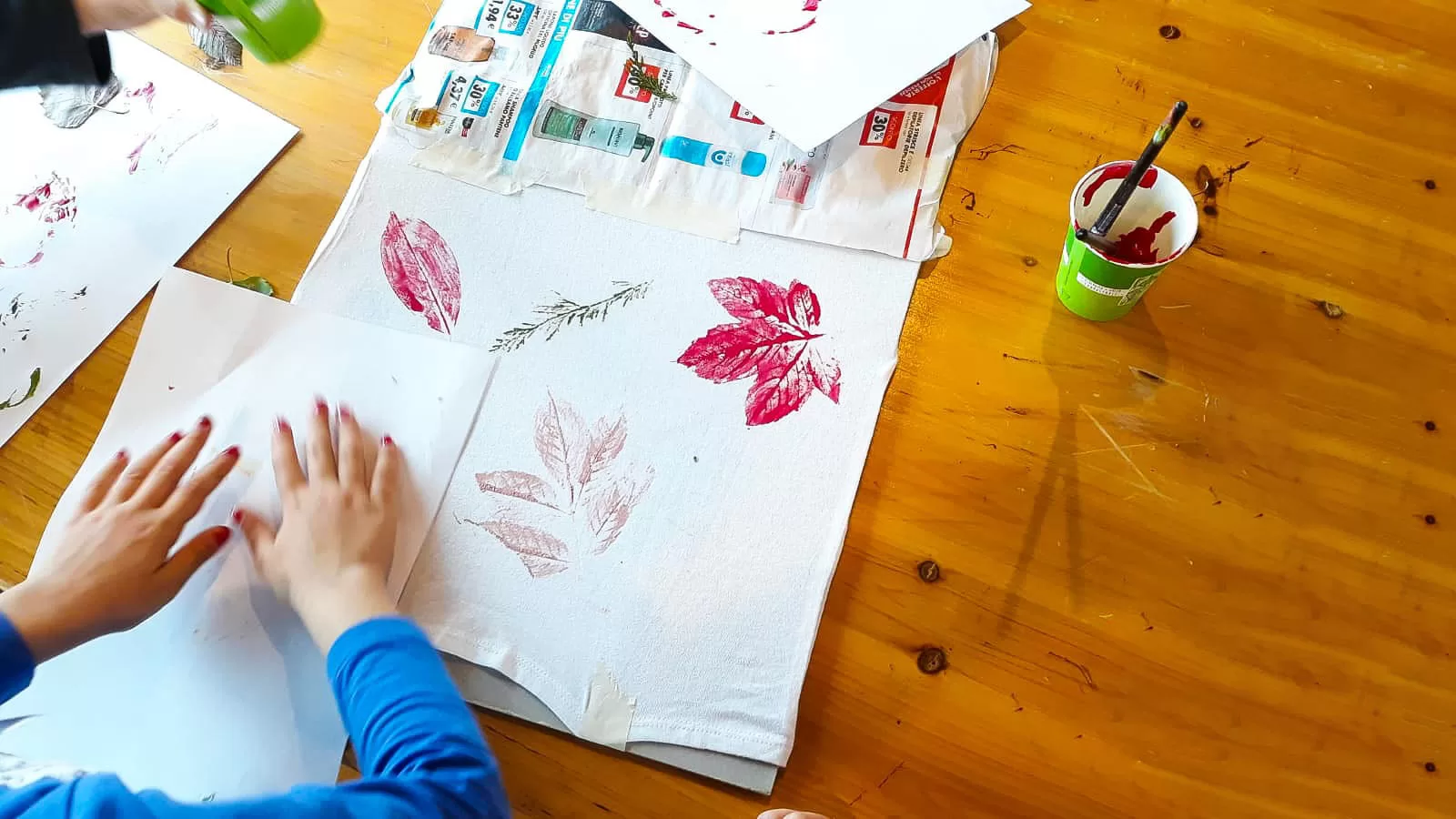
A love and knowledge of nature can drive that shift in awareness needed to trigger the change that may heal our toxic relationship with the planet. Welcoming schools at the Vivaio Forestale Pian dei Corsi forestry centre was therefore a natural choice: they were offered a series of activities on protecting biodiversity, managing forest seeds and the reproduction of native woodland species, while also taking part in assessing climate change impact and land management that can incorporate sustainability principles. To best structure this, specific workshops were devised for the various age groups. These were based on play, creation and contemplation of beauty, and eco-awareness practices, but also art and meditation activities to connect with nature. The aims: to expose the interdependency that exists between us, the plant world and the natural elements, and to reach a fuller understanding of just how non-neutral human action can be in risks for the environment.
“Life on our planet is made possible by plants, which account for over 85% of Earth’s biomass. We humans belong to that mere 0.3% comprising the entire animal kingdom, which we are a part of.”. Such a small number and yet so dangerous for nature’s balance: we are the only species that damages its own ecosystem ‒ behaviour that is far from wise. (Stefano Mancuso, 2019)
The studies by Stefano Mancuso, Director of LINV (International Laboratory of Plant Neurobiology), and the research by many experts, such as Peter Wohlleben, shed light on just how much observation and knowledge of the plant world can help us. Contrary to what we tend to believe, plants are sophisticated organisms, they possess all five senses (even if these work differently to ours), exchange information, interact with animals, adopt strategies to survive and make the most of their energy resources. Trees are the most complex living beings in the plant kingdom. Their rough bark conceals fascinating mysteries and they are capable of choosing, learning and remembering. Woods and forests are authentic examples of communities, with individuals that communicate and interact with each other. Taking part in a creative workshop surrounded by nature means going on a journey into a green and ‘bright’ world to also discover just how vital the forest’s health is to our own survival.